
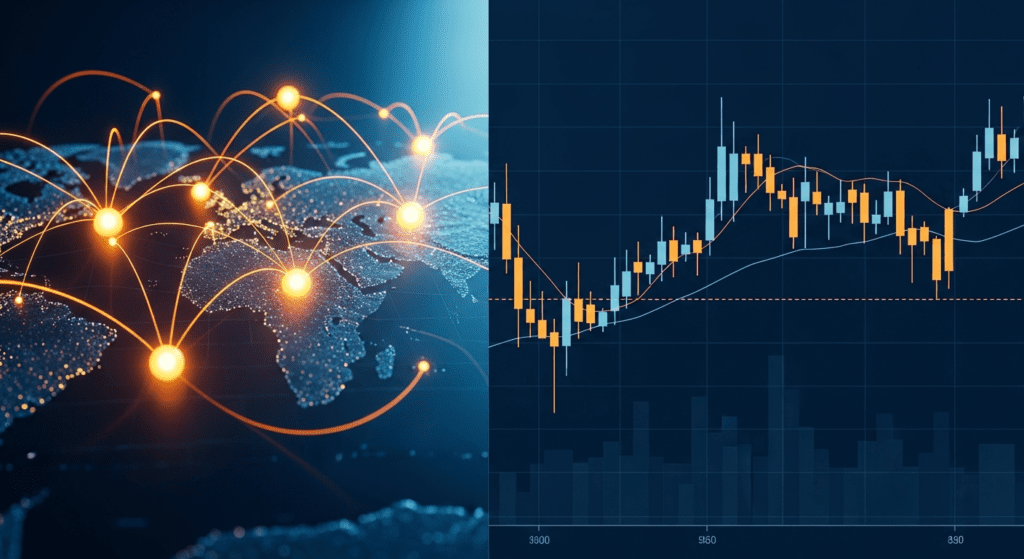
XRP is a genuinely useful asset for some investors and a poor fit for others. It has a real-world settlement use case through Ripple‘s payment network, meaningful post-SEC legal clarity, and a growing institutional footprint. It also carries real centralization risk, a structural supply overhang from Ripple’s escrow, and a community dynamic that actively distorts price signals. Whether it belongs in your portfolio depends on factors specific to you, not on what the XRP Army is shouting this week.
This analysis is not financial advice. What follows is an honest breakdown of how XRP actually works, where the bull case holds up, and where the weaknesses are real. Verify everything here against current market conditions and your own risk tolerance before making any decision. The escrow figures cited below are flagged as [STATIC] because they change monthly; confirm the current balance on the XRP Ledger before using them for any calculation.
What Is XRP Actually Used For?
XRP serves as a bridge currency in cross-border payments, allowing financial institutions to move value between two currencies without pre-funding nostro accounts (the correspondent banking term for a balance held at a foreign bank) in both. The key mechanism is ODL (On-Demand Liquidity), Ripple’s product that sources XRP liquidity in real time to complete a transfer, then converts back to the destination currency on the other side, typically within three to five seconds.
The practical appeal is real. Traditional correspondent banking requires institutions to park capital in accounts worldwide, capital that sits idle and earns nothing. ODL eliminates that requirement on corridors where it operates. Ripple has publicly confirmed active ODL corridors in markets including Mexico, the Philippines, and parts of Southeast Asia, with SBI Remit in Japan and several other licensed money service businesses named as partners. MoneyGram was an early partner before its contract with Ripple expired.
That said, the marketing often runs ahead of the reality. XRP is not powering the majority of global remittances. Swift GPI, Visa Direct, and stablecoin-based settlement rails all compete on the same corridors, and several of them require no volatile intermediate asset. The total volume routed through ODL remains a small fraction of global cross-border payment flows. What XRP offers is a technically credible use case, not a monopoly.
What Is the Bull Case for XRP?
The bull case for XRP rests on four pillars: legal resolution, institutional adoption, ETF access, and the scale of the cross-border payment market it is targeting.
In August 2023, Judge Analisa Torres ruled in SEC v. Ripple Labs that programmatic sales of XRP on exchanges did not constitute unregistered securities offerings. That decision did not fully resolve every aspect of the case, but it removed the existential legal overhang that had suppressed XRP‘s price and kept major U.S. exchanges from listing it. Coinbase, Kraken, and others relisted within days of the ruling. That clarity matters for institutional players who need legal certainty before allocating. For a detailed breakdown of what the ruling actually changed, see our XRP price prediction and SEC ruling analysis.
On the institutional front, Ripple has secured money transmitter licenses in multiple U.S. states and holds a BitLicense in New York. The company has also moved into custody and tokenization infrastructure, which positions it to benefit from the broader institutional tokenization wave rather than just remittance volume.
The ETF angle is worth watching. Following the approval of spot Bitcoin and Ethereum ETFs in the U.S. in 2024, XRP ETF applications from Franklin Templeton, Bitwise, and others are under review. If approved, these would bring a class of capital that currently cannot hold crypto directly into the asset.
The committed holder base is also a real factor, though it cuts both ways. A significant portion of XRP supply has not moved in years, suggesting long-term conviction at scale. That reduces circulating float and can amplify price moves when demand increases.
What Are the Risks of Investing in XRP?
The risks are specific and worth naming plainly rather than burying them in vague “volatility” language.
Centralization is the most structurally significant concern. Ripple Labs controls approximately 47 billion XRP in escrow [STATIC, verify at xrpl.org], releasing up to one billion tokens per month. Ripple publishes an XRP Markets Report quarterly disclosing escrow activity; the re-escrow mechanism means not all released tokens hit the open market immediately, but the overhang is persistent. No other major Layer-1 asset has a single corporate entity sitting on that level of potential selling pressure. When Ripple needs to fund operations or partnerships, it has the option to sell from treasury rather than raise equity, and that optionality is always sitting in the background as a supply risk for holders. The XRP Ledger’s validator set has expanded significantly since 2020, but historically included Ripple-operated nodes as a meaningful fraction of the consensus weight. Critics who call XRP “not actually decentralized” are working from real structural data, not FUD.
The stablecoin competition point deserves more attention than it typically gets in XRP discussions. USDC and USDT can settle cross-border payments on Stellar, Solana, or even the XRP Ledger itself, without price volatility risk during the transfer window. For a money service business optimizing for settlement certainty, a stablecoin corridor is arguably simpler to operate than an ODL corridor with a volatile bridge asset. The counterargument from the XRP bull camp is that ODL does not require the sender or receiver to hold a stablecoin balance at all, whereas USDC or USDT settlement requires counterpart custody and off-ramp liquidity on the destination side. Both are real points. The honest read is that stablecoins have been gaining ground on the same corridors where ODL operates, and Ripple implicitly acknowledged this by launching RLUSD, its own stablecoin. A company competing with its own bridge asset is a structural tension worth watching.
Partnership dependence is the third structural risk. XRP‘s utility case rises and falls with Ripple’s commercial execution. If Ripple fails to sign new financial institution partners, the growth narrative weakens. There is no permissionless developer ecosystem building on XRP‘s settlement utility the way Ethereum has a decentralized application layer. You are essentially betting on a B2B sales team as much as on the technology.
Finally, retail sentiment amplification. The XRP Army is among the most coordinated and vocal communities in crypto, and that creates predictable distortions. Price pumps on rumors, coordinated pushback against any critical coverage, and a tendency to read every regulatory development as uniquely bullish all contribute to a retail sentiment cycle that frequently runs far ahead of fundamentals. Understanding that dynamic is not a reason to avoid XRP; it is a reason to be precise about your entry and exit thesis rather than getting swept up in it.
Should You Buy XRP Right Now?
XRP is worth serious consideration if you want exposure to the institutional cross-border payment thesis, you have a multi-year time horizon, and you can size the position to reflect the centralization and execution risks described above. It is a poor fit if you need a store-of-value with minimal issuer risk, or if you are expecting a short-term catalyst that the community is currently hyping.
Here is how I actually think about position sizing for this specific asset, based on tracking this market since the SEC filing in late 2020. XRP‘s risk profile is different from Bitcoin or Ethereum. BTC has a hard supply cap and no central issuer. ETH has a programmable ecosystem with fee burn mechanics. XRP has a corporate sponsor with a large treasury and a single core use case still proving commercial scale. That does not make it a bad asset; it makes it a different category of risk. For a portfolio with meaningful crypto exposure, sizing XRP at roughly half the allocation of a comparable BTC or ETH position reflects the additional issuer and execution risk. That is a heuristic, not a formula, to ensure that if Ripple’s commercial execution disappoints over the next 18 to 24 months, the position does not define the portfolio’s outcome.
The scenario where XRP earns a larger weight is the one where audited ODL volume starts compounding quarter over quarter, not just the one where the price is rising. A portfolio allocation that makes sense for BTC does not automatically make sense for XRP, and treating the two as interchangeable is one of the more common errors I see in retail allocation discussions.
The signals I would watch before adding or reducing:
Bullish triggers: a material, audited increase in ODL transaction volume reported by Ripple and its partners; ETF approval with tracked inflows above $500 million in the first 90 days; at least three tier-one banks integrating ODL into production payment flows rather than pilot programs.
Bearish triggers: a significant increase in monthly escrow releases hitting the open market above the historical average; major partner defections to stablecoin rails; regulatory action targeting Ripple’s institutional products specifically rather than crypto broadly.
For more perspective on where price analysts actually disagree, see our piece on whether XRP can realistically hit $100 or $200 and why the timelines matter more than the targets.
If you are building your position research checklist, work through these before committing capital: confirm the current escrow balance and recent release volumes on the XRP Ledger, check Ripple’s latest XRP Markets Report for ODL corridor updates, and verify whether any pending ETF applications have moved to a decision stage since this analysis was written. Those three data points will tell you more than any price prediction article. The context above should sharpen your due diligence, not replace it.
This analysis was last reviewed in June 2026. XRP market conditions and regulatory status change frequently. Check the publication date before acting on any specific figure.
Is XRP Dead?
No. XRP is not dead. The XRP Ledger continues to process transactions, Ripple continues to operate and sign commercial agreements, and institutional interest in the asset class is higher in mid-2026 than it was during the depths of the SEC litigation. “XRP is dead” is a cycle that recurs every bear market and has been wrong repeatedly.
The more useful question is whether XRP‘s peak utility case has arrived or is still ahead. The Bank for International Settlements puts annual global cross-border payment volume at over $150 trillion [STATIC, sourced from BIS CPMI data]. Ripple’s current ODL throughput is a small fraction of that. The gap between present state and that potential is what explains why the asset holds speculative interest beyond what current transaction volumes alone would justify.
That said, stagnation is a real scenario. If Ripple fails to expand ODL corridors meaningfully over the next two years while stablecoin-based alternatives mature, XRP‘s utility premium could compress even as the asset remains technically functional. Alive is not the same as growing, and the difference matters for how you size the position.
XRP vs Bitcoin: Which Makes More Sense for Your Portfolio?
Bitcoin and XRP are solving different problems, and the comparison only makes sense if you are clear about what thesis you are buying. Here is how the two actually differ across the dimensions that matter for an allocation decision:
Supply model: BTC has a hard cap of 21 million coins, fully enforced by code, with no central issuer. XRP has a maximum supply of 100 billion, with Ripple controlling approximately 47 billion [STATIC] in escrow and releasing up to one billion per month.
Use case thesis: BTC is a fixed-supply store of value, functioning as a macro hedge and digital scarcity asset. XRP is a corporate-backed payment utility token with a single primary use case still proving commercial scale.
Issuer risk: BTC has none. If Satoshi’s coins move tomorrow, the protocol is unaffected. XRP’s utility narrative depends entirely on Ripple continuing to execute commercially and maintaining regulatory standing.
Ecosystem: Bitcoin has a growing layer-2 ecosystem and broad institutional recognition. XRP’s ecosystem is narrower, focused on the ODL corridor use case and Ripple’s enterprise clients, with no comparable permissionless developer activity.
If your thesis is “crypto as macro hedge,” BTC is the cleaner expression. If your thesis is “institutional settlement infrastructure,” XRP is a coherent bet, though it competes with Stellar, JPMorgan’s Onyx, and stablecoin rails for that narrative. Holding both is not illogical. Treating them as equivalent in terms of issuer risk is a mistake that tends to show up most painfully during regulatory news cycles.
Frequently Asked Questions About XRP as an Investment
Is XRP a good long-term investment?
XRP has a credible long-term thesis if Ripple successfully expands ODL adoption among financial institutions and wins regulatory clarity in major markets. The risks are real: centralized supply control, stablecoin competition, and single-partner dependence. It is a speculative asset with a specific use case, not a broad store of value. Most analysts treat it as a high-risk, high-upside allocation, not a portfolio anchor.
Why is XRP down right now?
XRP is highly correlated to overall crypto market conditions and often amplifies Bitcoin’s moves in both directions. Additional downward pressure can come from Ripple escrow releases adding supply, negative regulatory news, or simply sentiment shifts after a rally. Checking whether a price drop is XRP-specific or market-wide is the first diagnostic step before reading anything into a decline.
Should I buy XRP before the ETF decision?
ETF approval would likely be a positive catalyst, but trading on a regulatory timeline is speculation, not investing. The SEC’s approval process has no guaranteed timeline and has surprised markets before. If you are buying XRP purely as an ETF front-run, you are taking event risk with no floor. If the fundamentals justify a position independently of the ETF, that is a more defensible reason to buy.
How much XRP does Ripple still hold?
As of mid-2026, Ripple holds approximately 37 to 47 billion XRP across escrow accounts [STATIC], depending on the monthly release and re-escrow cycle. The company releases up to one billion tokens per month from escrow, then re-locks any unused portion for a future release. This creates a predictable but persistent supply mechanism that is publicly auditable on the XRP Ledger. Verify the current escrow balance directly via the XRP Ledger explorer before using this figure in any analysis.
Is XRP better than Stellar (XLM) for cross-border payments?
XRP and Stellar (XLM) share a common origin and similar technical approaches to cross-border settlement. Ripple targets institutional partners and licensed financial institutions; Stellar has historically focused on financial inclusion and developing markets, with IBM World Wire and MoneyGram as past anchor relationships. Neither has definitively won the institutional corridor market. Your view on enterprise B2B sales execution versus open-network adoption will drive which thesis you find more compelling.
Is XRP dead?
No. The XRP Ledger continues to process transactions, Ripple continues to operate and sign commercial agreements, and institutional interest in the asset is higher in mid-2026 than during the SEC litigation period. XRP dead predictions recur every bear market and have been wrong repeatedly. The more relevant question is whether ODL corridor growth is accelerating or stalling relative to stablecoin-based alternatives.

Charles Benkovich is the Crypto Editor at Hold Hub. He covers Bitcoin, Ethereum, XRP, and macro-driven market analysis with a focus on on-chain data over price speculation. His editorial standard: claims are sourced or labeled as analysis, and the site takes no payment to cover any project.

